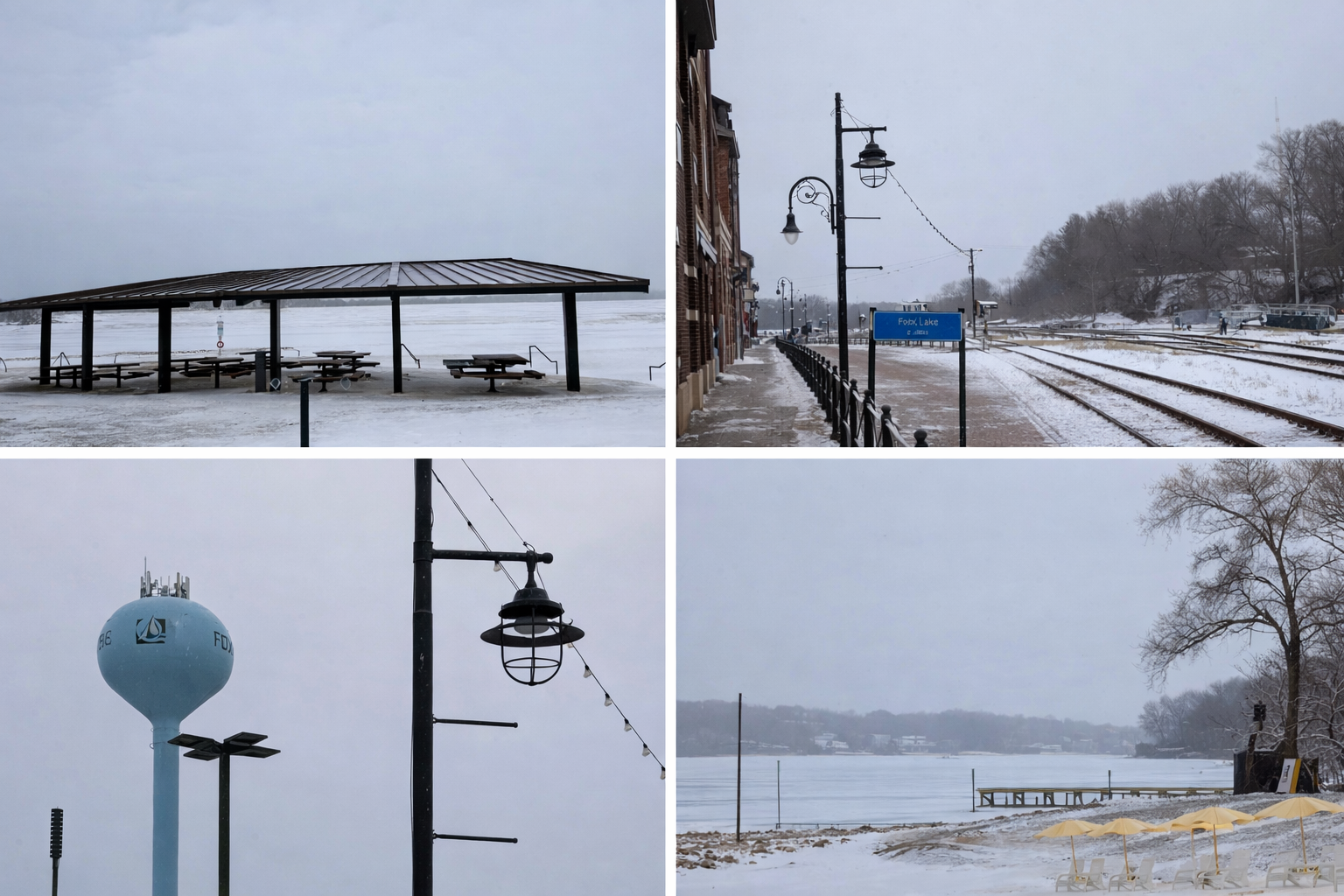
Today, Fox Lake can feel like a place of calm water, weekend recreation, and quiet neighborhood life. Boats still move through the channels. Restaurants and docks still draw summer visitors. The Chain O’Lakes still carries that unmistakable feeling of escape. But talk to enough people who know the area, and another version of Fox Lake begins to emerge—one remembered less as a sleepy lake town than as a place where the nights stretched long, the music played loud, and just about everybody came to let loose.
For years, Fox Lake has lived in local memory as a kind of rough-edged playground on the water. It was the sort of place people described with a grin and a raised eyebrow. A place where boaters tied up for the day and stayed through the night. A place where barrooms, dance floors, cottages, and lakefront hideaways blurred together into one long weekend. A place where, as some still put it, hippies and rednecks drank side by side, argued, laughed, flirted, and partied until morning.
“It was the kind of place people remembered with a grin and a raised eyebrow.”
A Town Built by Water and Escape
That reputation did not appear overnight.
Fox Lake’s identity has long been shaped by water. As part of the Chain O’Lakes region, it developed as a getaway for people seeking relief from city life. The lakes offered fishing, boating, resorts, and an easy kind of summer freedom that was hard to replicate inland. What began as recreation slowly became culture. What began as tourism became mythology.
In its earlier decades, the area drew vacationers, sportsmen, and city dwellers looking for fresh air and leisure. Resorts and hotels helped transform the lake country into a destination. Over time, that resort energy evolved into something rowdier and more democratic. Fox Lake was not only for the wealthy or the polished. It became a place where working people, weekenders, bikers, drifters, and regular families could all stake some claim to summer fun.
That mix may be part of what made the town memorable.
Where the Nights Grew Long
Fox Lake developed the kind of social atmosphere that small towns often publicly deny and privately remember in vivid detail. There were bars where stories got bigger as the night wore on. There were dance halls and taverns where music spilled into parking lots. There were lake houses and rentals where gatherings started casually and ended at sunrise. There were boats serving as floating front porches, gathering places, and party platforms all at once.
And because it was a lake town, the partying had its own geography. Roads mattered, but water mattered more. People arrived by boat, drifted from one social scene to another, and made the shoreline part of the nightlife. On hot weekends, the lakes became both destination and stage.
“On hot weekends, the lakes became both destination and stage.”
To some, that culture looked unruly. To others, it felt liberating.
Two Lives at Once
That is the tension at the center of Fox Lake’s story. Towns built around recreation often live two lives at once: the respectable version told in brochures and the lived version told in anecdotes. Fox Lake appears to have had both. By day, it was a scenic escape. By night, at least in local lore, it could become a little wild, a little loud, and a lot less interested in appearances.
That spirit likely changed with each generation. In one era, the energy may have centered on resorts, taverns, and dance pavilions. In another, it may have shifted toward biker culture, beer-soaked weekends, and the loose social alliances of the late 1960s and 1970s. The phrase about “hippies and rednecks” captures something larger than stereotype. It suggests Fox Lake was one of those unusual American places where cultural lines blurred because the real common denominator was not politics or class. It was escape.
People came to the water to feel free.
“The real common denominator was not politics or class. It was escape.”
Not Elegant, But Alive
That freedom, of course, had consequences. Party-town reputations are never built on romance alone. They carry stories of excess, hard drinking, fistfights, broken relationships, bad decisions, and mornings people would rather not revisit. Yet those same places also produce enduring memory. Ask people about towns that felt alive in ways cleaner, quieter places never did, and they tend to describe somewhere like Fox Lake.
Not elegant. Not always safe. Not always polished. But alive.
What remains compelling about Fox Lake is not merely that it once had a wild side. Many towns can say that. What makes it interesting is the way the place seems to hold together several versions of Midwestern life at once: working-class leisure, summer nostalgia, rough hospitality, rebellion, local legend, and waterfront freedom. Fox Lake was not just a destination. It was a mood.
Why the Stories Still Linger
And maybe that is why the stories persist.
Even now, beneath the newer homes, quieter streets, and family-friendly branding, the older reputation still flickers. It survives in boat talk, bar talk, old photographs, and half-laughed memories. It survives in the sense that this was once a place people came not to behave better, but to behave more openly. To drink harder, stay out later, and live a little louder than they did back home.
Fox Lake, in that telling, was never just another Illinois town. It was the wild side of the water.
“Fox Lake was not just a destination. It was a mood.”